Spain is one of the best places in the world to go solar. With over 2,500 sunshine hours per year across most of the country and some of the highest residential electricity prices in Europe, the financial case for a home solar installation is compelling. But the quality of that installation depends almost entirely on the company you hire to do it.
Not all solar installers in Spain are equal. Some are experienced, certified, and locally established. Others are national call-centre operations that outsource the actual work to the cheapest subcontractor available. A small number are frankly opportunistic — particularly in the Costa Blanca and Costa del Sol areas where there is a large expat population that may be unfamiliar with Spanish administrative processes and therefore easier to overcharge or underdeliver to.
This guide explains what genuinely separates top-rated solar installers from the rest, what the installation process should look like from start to finish, what red flags to watch out for, and why local expertise matters more than most homeowners realise.
What Makes a Solar Installation Service “Top-Rated”?
A five-star Google review tells you something. A hundred five-star reviews tell you more. But reviews alone don’t capture everything that matters in a solar installation — because many problems only become visible months or years after the panels go up.
The characteristics that truly define a top-rated solar installer are:
Proper certification and legal authorisation. In Spain, all grid-connected photovoltaic installations must be carried out by a registered electrician authorised by the relevant Comunidad Autónoma. The installer must also be registered as an empresa instaladora with the appropriate category for solar work. Ask for these credentials before signing anything.
Transparent, itemised quotations. A top installer provides a detailed quote that names the exact panel model, the exact inverter brand and model, the mounting system, the cable specification, and all associated components. Spain’s UNEF (the national solar association) specifically recommends that installers share component datasheets alongside their budget. Any quote that simply says “quality solar panels” without naming the brand is not good enough.
Full-service project management. A genuinely complete solar installation in Spain involves far more than putting panels on a roof. It includes the initial energy study, system design, supply of all equipment, the physical installation, the electrical connection, the legalisation paperwork, the registration with the Comunidad Autónoma, the notification to the electricity distributor, and the subsidy applications. A top-rated company handles all of this. If an installer hands you a folder of forms to fill in yourself, that is not a complete service.
Local presence and track record. An installer based in your province knows the local electricity distributor, the specific requirements of your Ayuntamiento, the quirks of regional subsidy applications, and the typical roof types and electrical configurations in your area. National companies that send teams from hundreds of kilometres away often lack this knowledge and typically offer weaker aftersales support.
Post-installation monitoring and support. Once your system is running, who do you call if there is a problem? The best installers in Spain assign you a direct point of contact, monitor your system’s output remotely, and respond quickly to any service issues. This matters over a 25-year system lifespan far more than the price of the initial installation.
The Full Installation Process: What to Expect from a Top-Rated Company
Understanding what a proper installation looks like helps you evaluate any company you are considering. Here is what the process should include at every stage.
Initial Site Assessment and Energy Study
A good installer does not quote you over the phone or by email based on your floor space alone. They send a qualified technician to your property to assess:
Your roof’s orientation, pitch, and available surface area. South-facing roofs at 30 to 35 degrees produce the most energy in Spain, but east, west, and even north-facing panels can still be viable depending on your consumption patterns. A skilled technician will model the actual expected output for your specific roof.
Your current electricity consumption. The installer should analyse your recent electricity bills to understand your usage patterns across different hours of the day and different seasons. This determines the correct system size and whether battery storage would improve your return.
Your existing electrical infrastructure. The main switchboard, the contracted power rating, the condition of internal wiring, and the available space for the inverter and any batteries all influence the installation design.
Shading analysis. Trees, chimneys, satellite dishes, and neighbouring buildings can all cast shadows that reduce output. A thorough shading assessment is essential, particularly if your roof has any obstructions.
System Design and Quotation
After the site visit, the installer produces a system design and a written quotation. This should include:
The number and model of solar panels, with the manufacturer’s datasheet. The inverter brand, model, and rated power output. The mounting system specification, matched to your roof type. Any optimisers or battery storage included. The total installed capacity in kilowatts. The projected annual energy generation in kilowatt-hours, based on your specific location and roof orientation. The estimated annual savings on your electricity bill. The projected payback period. A clear payment schedule.
In Spain, it is standard practice to get two or three quotes from different installers. Prices for an equivalent 5 kW system can vary by 10 to 20 percent between companies for the same quality of equipment. Getting multiple quotes takes a few hours and can save you several hundred euros.
Subsidy and Grant Management
This is where the difference between a good installer and an average one becomes most financially significant. Spain offers multiple overlapping incentive programmes that collectively can reduce the net cost of a solar installation by 40 to 60 percent. These include:
The Next Generation EU funds channelled through regional programmes. The IRPF personal income tax deduction of 20 to 40 percent on installation costs, applicable for improvements that improve your home’s energy rating, with an annual cap of €5,000 and the ability to carry unused amounts forward over four years. The IBI property tax reduction offered by most Alicante municipalities, typically 30 to 50 percent for three to five years after installation. The ICIO construction tax exemption of up to 95 percent.
A top-rated installer manages all of this on your behalf. They know which programmes are currently open, how to prepare the required technical documentation, and how to submit applications correctly to maximise approval rates. Many homeowners who go with cheaper or less experienced installers end up leaving thousands of euros of subsidy money unclaimed simply because the paperwork was not handled properly.
Professional Installation
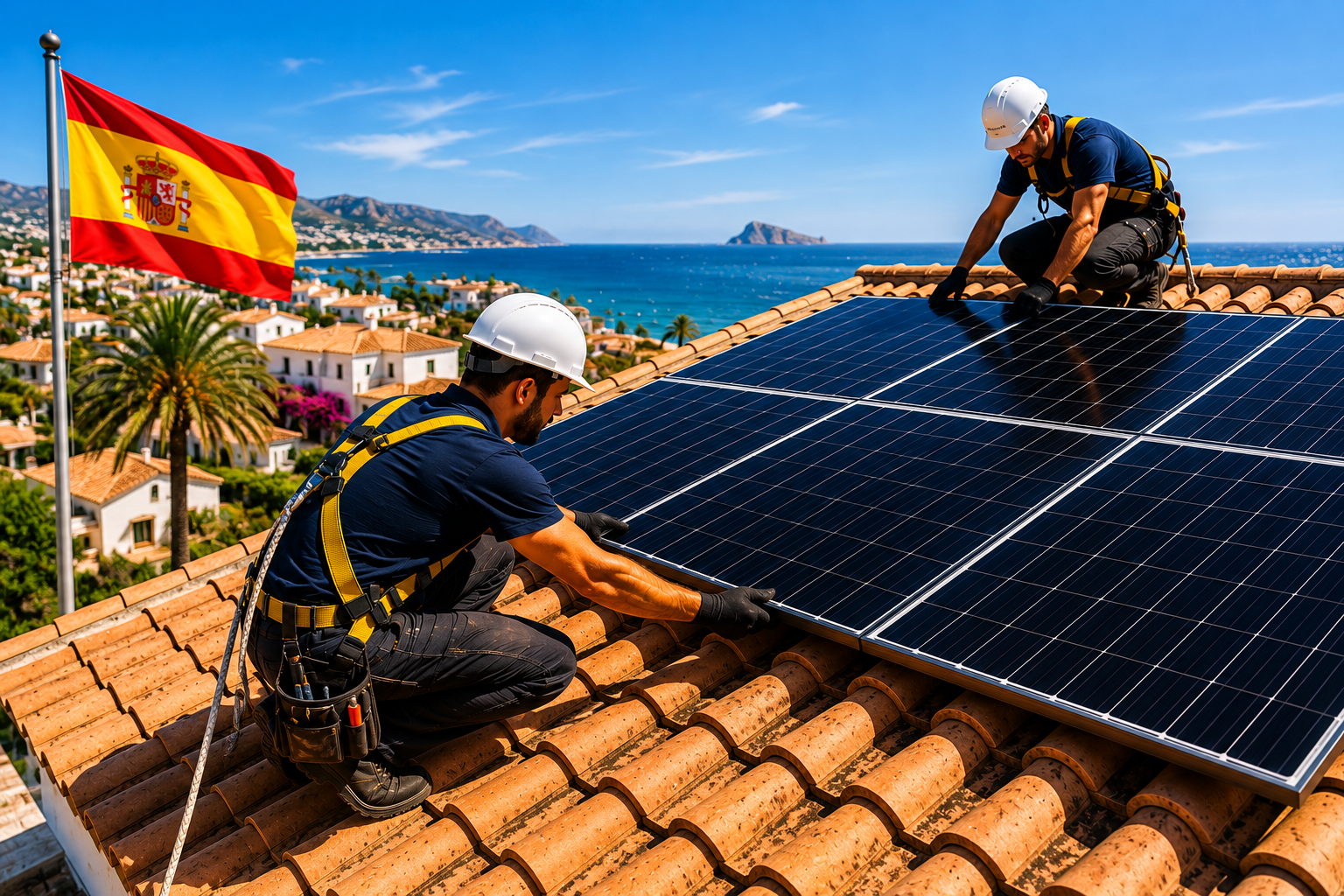
The physical installation of a residential solar system in Spain typically takes one to three days, depending on system size and roof complexity. A professional installation team:
Secures the mounting system to your roof using certified fixings appropriate for your specific roof covering, whether clay tiles, concrete tiles, flat roofing, or a metal structure. Mounts the panels on the structure and connects them in the correct string configuration. Installs the inverter in a sheltered, ventilated location, typically in a garage, utility room, or under the panels themselves. Runs all cabling through protective conduit according to Spain’s low-voltage electrical regulations. Connects the system to your main electrical panel with the appropriate safety devices. Configures the monitoring system so you can see real-time production data from your smartphone.
A good installer does not leave your roof looking like a cable installation site. Visible wiring should be neatly routed and protected.
Legalisation and Grid Connection
This stage is what separates professional installers from informal operations. After installation, a legal and compliant solar system in Spain requires:
The issue of the Certificado de Instalación Eléctrica (CIE) by the installing electrician. Registration of the installation with the Comunidad Autónoma’s industrial authority. Notification to your electricity distributor (Iberdrola, Endesa, or whichever company operates your local grid) to arrange the installation of a bidirectional meter that records both your consumption and your grid exports. If you are claiming MOVES III or regional subsidies, submission of the required documentation to the relevant authority. If applicable, registration in the national self-consumption registry to formalise your right to surplus compensation.
An unlegalised installation cannot legally export electricity to the grid, is ineligible for any subsidy, and creates complications when you come to sell your property. Some cheaper installers skip or rush through this stage. A top-rated company completes every step.
Commissioning and Handover
Once everything is connected and registered, your installer should walk you through the monitoring system, show you how to read your production data, explain how surplus compensation works on your electricity bill, and confirm that your system is generating as expected.
At Solarea Tech, we monitor every new installation remotely for the initial weeks of operation to confirm output is in line with our projections and to catch any configuration issues before they affect performance.
Red Flags to Watch Out For
The solar market in Spain has attracted some operators who are more interested in closing sales than in delivering quality installations. These warning signs should make you cautious:
No physical site visit before quoting. Any installer who quotes a fixed price without visiting your property is either guessing or cutting corners. The correct system size, mounting approach, cable run length, and inverter location cannot be determined without a site inspection.
Vague equipment specification. If a quote does not name specific panel and inverter brands and models, ask for them. If the installer refuses or provides generic descriptions like “high-efficiency monocrystalline panels,” be wary. You are entitled to know exactly what you are buying.
Pressure to sign immediately. Any company offering time-limited discounts or warning that subsidy programmes are about to close is using a sales tactic, not giving you accurate information. Legitimate subsidy programmes operate on published timelines, and a reputable installer will give you time to compare proposals.
Very low quotes without explanation. A system priced 30 to 40 percent below comparable quotes from other companies is almost certainly using lower-grade equipment, skipping the legalisation steps, or planning to pass the subsidy paperwork responsibility to you. The cost of a solar installation reflects real equipment and labour costs. Significant underpricing has to come from somewhere.
No mention of legalisation. If an installer does not proactively explain the registration and grid-connection process, ask specifically whether their quote includes full legalisation. If they are evasive, look elsewhere.
No local office or address. An installer with a local office, physical presence, and established track record in your province is far more accountable than one operating purely through a national website and a call centre.
Large upfront deposits. A reasonable deposit to reserve an installation date is normal, but any installer asking for full payment or more than 30 to 40 percent upfront before work begins should be approached with caution.
Why Local Expertise Matters for Installations in Alicante
The Alicante province has specific characteristics that a locally experienced installer understands far better than a national operator:
The local electricity distributor is Iberdrola in most of the province, and the grid connection notification process has particular documentation requirements that an experienced local installer navigates without delays.
The Comunidad Valenciana has its own specific regional subsidy programmes and administrative processes that differ from those in Cataluña, Andalucía, or Madrid. An installer based in Alicante has submitted dozens or hundreds of these applications and knows how to get them approved efficiently.
Local roof types vary considerably. Traditional clay tile roofs on older Spanish properties require a different mounting approach than flat concrete rooftops on modern urbanisations. An experienced local team has seen every variation and knows which mounting systems work for each.
The climate in Alicante is one of the sunniest in Europe, which means system sizing calculations are based on real local solar irradiance data rather than national averages. A locally experienced installer uses actual data from your specific location.
At Solarea Tech, we have carried out over 500 installations across Alicante province, in municipalities from Elche to Torrevieja to Benidorm to the inland areas around Villena and Alcoy. This local experience is reflected in the accuracy of our energy projections, the efficiency of our subsidy applications, and the speed of our grid connection notifications.
What a Top-Rated Installation Includes at Solarea Tech
To give you a concrete example of what a complete, professional installation looks like, here is what every Solarea Tech residential project includes:
A free personalised site visit and energy consumption analysis. System design using JA Solar or LONGi panels, Huawei inverters, Novotegra mounting structures, and TIGO optimisers where shading is a factor. Full management of MOVES III and Comunitat Valenciana subsidy applications before installation begins. Professional installation by our own certified team, not subcontracted labour. Complete legalisation including the CIE certificate, Comunidad Autónoma registration, and Iberdrola grid connection notification. Configuration of the Huawei FusionSolar monitoring app so you can see your production in real time from day one. Ongoing remote monitoring of your system’s performance. A product warranty of up to 25 years on panels and 10 years on inverters (extendable to 20), backed directly by the manufacturers.
You can learn more about our installation service on our solar panel installation page or read about the equipment we use in our guide to the best solar panel brands for residential use.
Questions to Ask Before Choosing a Solar Installer in Spain
Use these questions to evaluate any company you are considering:
Are you a registered empresa instaladora authorised for photovoltaic work in the Comunidad Valenciana?
Will you provide the exact panel model, inverter model, and mounting system in writing before I sign?
Does your quote include full legalisation, grid connection notification, and subsidy application management?
Who carries out the physical installation — your own employees or subcontractors?
What happens if there is a problem after installation? Who do I contact, and how quickly will you respond?
Can you provide references from recent local installations I can contact directly?
A confident, experienced company will answer every one of these questions clearly and without hesitation.
Frequently Asked Questions
How long does a residential solar installation take in Spain from first contact to completion? With Solarea Tech, the typical timeline from initial consultation to a fully commissioned and legalised system is four to six weeks. The physical installation itself takes one to three days. The legalisation and grid connection steps account for most of the remaining time and depend partly on response times from the distributor and regional authority.
Do I need to be present during the installation? It helps to be available on the installation day, but it is not strictly necessary if you can arrange access. We keep clients informed at every stage.
What happens if my installer goes out of business after installing my system? This is a legitimate concern. With Tier 1 brands like JA Solar, LONGi, and Huawei, your manufacturer warranties are held directly with the manufacturer and remain valid regardless of the installer’s status. For the installation workmanship itself, we recommend choosing a locally established company with a proven track record rather than a recently formed operation.
Can an expat or non-resident have solar panels installed in Spain? Yes, with no restrictions. We work with international clients across the Alicante province and provide full English language support throughout the process.
How do I know my system is performing as promised after installation? The Huawei FusionSolar monitoring app gives you real-time and historical production data. We also monitor your system remotely and will contact you proactively if we detect any underperformance.
Talk to Solarea Tech About Your Installation
If you are based in the Alicante area and want a solar installation from a company with a verified local track record, transparent pricing, full subsidy management, and complete legalisation, we would be glad to arrange a free site visit and no-obligation assessment.
📍 Serving San Vicente del Raspeig, Elche, Benidorm, Torrevieja, Orihuela, Alcoy, Villena, and all municipalities across Alicante province.
📞 Call us: 669 34 86 07 🌐 Request your free assessment
Related reading: